

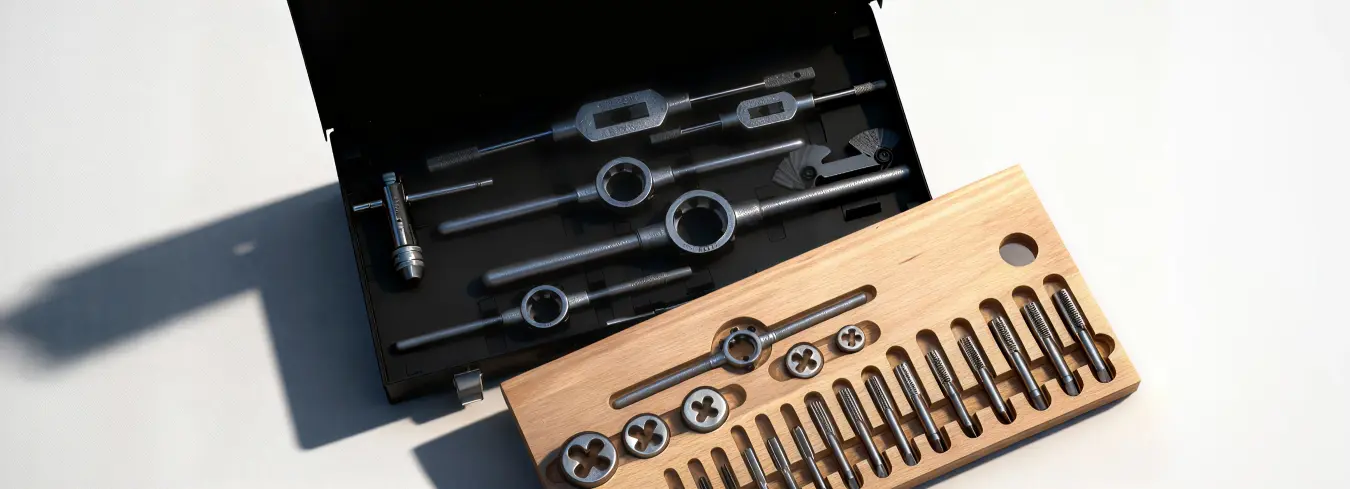
Direct Answer: A good threading tool kit includes taps and dies in the thread sizes you use, sturdy holders, a thread pitch gauge and a storage case. Choose HSS or cobalt tools, check the thread standard (metric, UNC, UNF or BSP) and match the kit to your workload.
A kit is only worth buying if every size in the box is one you will actually use.
A threading tool kit bundles tools designed for cutting, forming or repairing threads on screws, bolts, pipes and holes. It includes taps for internal threads, dies for external threads, guides, handles and sometimes thread gauges.
With everything in one box, you avoid mix-ups and buying single pieces over time. This guide explains which features matter, which trade-offs to accept and how to choose a kit that gives you precision and durability.
Threads are the spiral ridges on screws, bolts, nuts and tapped holes that let parts screw together securely.
Why Thread Accuracy Matters Before You Buy
Threads that are off, with the wrong pitch, poor alignment or a rough finish, cause stripped bolts, leaking pipes and weak joints. Parts may not fit at all.
Forcing poorly cut threads wastes time and can ruin a component, which then has to be replaced. In a workshop, that means lost hours and scrapped material as well as the cost of the part.
A quality thread tapping tool or threading tool kit cuts clean threads, meets specifications and gives parts that fit first time. That means fewer returns, less rework and a better result.
What to Look for in a Threading Tool Kit
Look for these components in a quality kit:
- Taps and dies in a full range of sizes, both metric and UNC or UNF if you might need imperial standards.
- Handles and holders that are sturdy and ergonomic, so they turn easily without slipping.
- Thread gauges or pitch-measuring tools, so you can verify the thread size you have or need.
- Quality materials, such as high-speed steel (HSS) or cobalt, which resist wear and breakage and stay sharp longer.
- A storage case that keeps pieces organised, labelled and protected from damage or rust.
A kit that covers these five points saves you from buying replacements and extras later.
Hand Taps, Machine Taps and Dies: What Each Does
Taps and dies come in several forms, and each suits a different way of working.
- Hand tap sets: usually include a taper, a plug and a bottoming tap for each size, and are turned by hand with a tap wrench.
- Machine taps: made to run in a drilling machine, lathe or tapping machine, which suits repeat work and faster production.
- Round dies: cut or re-cut external threads on rods and bolts, and are turned in a die stock.
- Hexagon die nuts: turned with a spanner, and mainly used to re-cut damaged external threads.
DIN standards commonly specify these forms. Examples are DIN 352 for hand taps, DIN 371 for machine taps, DIN 223 for round dies and DIN 382 for hexagon die nuts. Match the form to the job before you match the size.
Best Materials for Taps and Dies: HSS, Cobalt and Coated Tools
Look for taps and dies made of high-speed steel (HSS) or better. For harder materials such as stainless steel, cobalt tool steels and coatings such as titanium nitride (TiN) add strength and wear resistance.
Poor-quality kits made from soft steel dull quickly, mis-cut threads or even break under load. Basic carbon steel tools can suit occasional hand work in soft materials, but they wear faster than HSS.
Also inspect the finish, because rust prevention and clean, precisely ground cutting edges give cleaner threads and better accuracy.
Thread Standards and Sizes: Metric, UNC, UNF and BSP
The best kit covers the sizes you will actually use. Depending on your work, you may need metric sizes (for example M3 or M6), imperial UNC, UNF or BSW sizes, or pipe threads too.
| Standard | Typical use |
|---|---|
| Metric (M) | General engineering and electronics |
| UNC and UNF | Imperial fasteners, in coarse (UNC) and fine (UNF) pitch |
| BSW | Older British imperial threads |
| BSP | British Standard Pipe threads, common in the UAE |
| NPT | US pipe threads, also used on imported equipment |
BSP and NPT are not interchangeable, so check which standard your fittings use before you buy. Also pay attention to thread pitch, the distance between ridges, which varies even within one size.
Metric Tap Drill Sizes at a Glance
A tap needs a hole drilled slightly smaller than the thread’s nominal size. For metric coarse threads, the rule of thumb is tap drill size = thread diameter minus pitch.
| Thread | Pitch | Tap drill size |
|---|---|---|
| M3 | 0.5 mm | 2.5 mm |
| M4 | 0.7 mm | 3.3 mm |
| M5 | 0.8 mm | 4.2 mm |
| M6 | 1.0 mm | 5.0 mm |
| M8 | 1.25 mm | 6.8 mm |
| M10 | 1.5 mm | 8.5 mm |
| M12 | 1.75 mm | 10.2 mm |
Always confirm the drill size in a tap-drill chart for your thread standard and material.
Cutting Taps vs Forming Taps: Which Threading Tool Is Right?
Cutting and forming are the two main styles. Cutting tools are more common and simpler, and they suit general work.
Forming tools give stronger threads, because the grain flow is preserved, but they need more torque and more precise alignment. They suit ductile materials such as aluminium and low-carbon steel, and they are not suited to brittle materials such as cast iron.
Many kits include cutting taps and dies, while forming tools tend to be more specialised and costlier.
Build a kit around the threads you cut
Tell us the thread standard, pitch and material, and we will help you choose suitable taps and dies.
How to Align Taps and Dies for Accurate Threads
Even with a perfect kit, threads go wrong if the alignment is off. Using the right tool the right way matters.
For internal threads, drill the hole to the correct tap-drill size first and start the tap square. For external threads, chamfer the end of the rod so the die starts straight.
Use cutting oil or an equivalent lubricant to reduce friction, heat and wear. Accuracy depends on both the tool’s quality and how you use it.
When tapping by hand, check from two sides with a small square after the first few turns. A tap that starts crooked rarely corrects itself, so stop and realign early.
Signs a Tap or Die Needs Replacing
Worn tools cut poor threads and are more likely to break in the hole. Replace or regrind a tap or die when you notice:
- Rough, torn or shallow threads.
- Threads that come out oversize or undersize.
- Chipped or dull cutting edges.
- More force needed than before to turn the tool.
- Visible rust, pitting or wear on the flutes.
Replacing a worn tool early is cheaper than scrapping a part or removing a broken tap from a hole.
How to Maintain and Store Taps, Dies and Holders
Clean chips and metal shavings from the tools after use, and store them dry to avoid rust. Inspect the tools after every use, and have worn taps and dies replaced or reground before they start to cut poorly.
A good kit is easy to keep in order. Choose one that comes in a labelled box or organiser, with separators for taps, dies, guides and accessories, and size markings on the tools.
Proper storage avoids mix-ups between metric and imperial, keeps tools from banging together and dulling, and saves search time. If the case is sturdy and keeps moisture out, durability follows.
How Much Does a Good Tap and Die Set Cost?
Prices vary widely, from low-cost sets to top-grade professional kits with specialised dies and premium materials. Decide what the kit is for: occasional home repairs, automotive or plumbing work, or professional shop work.
For occasional use, a mid-range kit with essential sizes and decent HSS tools is enough. Be wary of very cheap kits for heavy-duty work, because they often fail early.
Compare the cost per thread over the life of the kit, not just the price on the box.
A cheap tap that breaks in a stainless steel part can cost more than a better tool. The damaged part may be scrapped, and the broken tap is hard to remove.
Which Kit Suits Your Workshop or Job?
The right kit depends on how you work, so start from the job.
| Use | What to prioritise |
|---|---|
| Occasional repairs | A mid-range metric set with HSS tools and a sturdy case |
| Maintenance workshop | Metric and imperial sizes, plus spare taps in the sizes you use most |
| Production and machine shop | Machine taps in quality materials, bought by the size you run daily |
| Pipework and plumbing | BSP taps and dies with solid holders |
| Repairing damaged threads | Re-cutting taps and dies, or a dedicated thread repair kit |
Most workshops fall between two of these rows. In that case, buy for the harder job and add smaller sets later, rather than starting with a kit that cannot cover your toughest thread.
Mistakes to Avoid When Buying Taps, Dies and Kits
Most poor purchases come from a few avoidable errors:
- Buying the biggest kit instead of the sizes you actually use.
- Ignoring the thread standard, and ending up with metric tools for imperial or BSP work.
- Choosing the cheapest set for heavy-duty or stainless steel work.
- Overlooking the holders, even though a poor tap wrench causes misaligned threads.
- Skipping the storage case, which leads to mix-ups and rusted tools.
- Forgetting that a tap is only as accurate as the hole drilled for it.
Safety Tips for Tapping and Threading
Threading tools are sharp and can injure people or damage workpieces. Wear eye protection to catch metal chips, and secure the workpiece firmly in a vice or clamp.
Use slow, steady force, and never force a tap or die that is not turning cleanly. Back out often to clear chips, and follow the safety instructions for any cutting oil.
Brand Reputation and Warranty: Buying a Kit You Can Rely On
Buying from a well-known brand often gives peace of mind, with better materials, replacement parts or warranty cover. Brands with good reputations tend to use tighter machining tolerances and better finishing.
Customer reviews about wear, thread fit and accuracy show whether a kit lives up to its claims.
Tips to Save Time When Threading
- Match your tools to the job: check the tap’s size and pitch before you start.
- Drill the hole to the correct tap-drill size, slightly smaller than the thread’s nominal size, so the tap cuts a full, clean thread.
- Use a tap wrench or die stock, and a guide where possible, to keep the tool square.
- Apply cutting oil or lubricant generously, and reapply as needed.
- When cutting external threads with a die, start gently, then tighten gradually, and clean chips as you go.
Four Questions to Answer Before You Buy
Answer these four questions, and the right kit usually becomes clear:
- Which thread standards and sizes do I use most often?
- Which materials will I thread, and do they need cobalt or coated tools?
- How often will I use the kit, by hand or on a machine?
- Where will I store it, and will it stay dry and organised?
A kit built around your honest answers saves time, boosts accuracy and gets the job right first time.
Volkel Taps, Dies and V-COIL Thread Repair From Al Rizq
Al Rizq’s threading range focuses on the tools covered in this guide:
- Volkel hand tap sets and machine taps.
- Volkel round dies and hexagon die nuts.
- V-COIL thread repair for damaged internal threads.
Have your thread size, pitch and material ready when you get in touch, and we can narrow the choice with you.
Match your thread size to the right tool
Browse our threading tools range, or send the thread size, pitch and material you work with for a customised quote within 24 hours.
Frequently Asked Questions
What is in a threading tool kit?
A kit usually includes taps for internal threads, dies for external threads, a tap wrench, a die stock and a thread pitch gauge. Good kits add a storage case.
How do I choose a threading tool kit?
Match the thread sizes and standard to your work, and choose HSS or cobalt tools of good build quality. Then check the holders, storage and brand reputation.
Should I choose HSS or cobalt taps and dies?
HSS is a good general-purpose choice. Cobalt tool steels suit harder materials such as stainless steel, and coatings such as TiN add wear resistance.
What is the difference between BSP and NPT threads?
Both are pipe thread standards. BSP is the British Standard Pipe thread, and NPT is the US standard, so they are not interchangeable.
What tap drill size do I need for an M10 thread?
An M10 x 1.5 coarse thread needs about an 8.5 mm tap drill. Always check a tap-drill chart for your thread standard and material.
Does Al Rizq supply taps and dies in Dubai?
Yes. Al Rizq supplies Volkel taps, dies and threading tools in Dubai and across the UAE. Send us the thread size, pitch and material for a quote.