

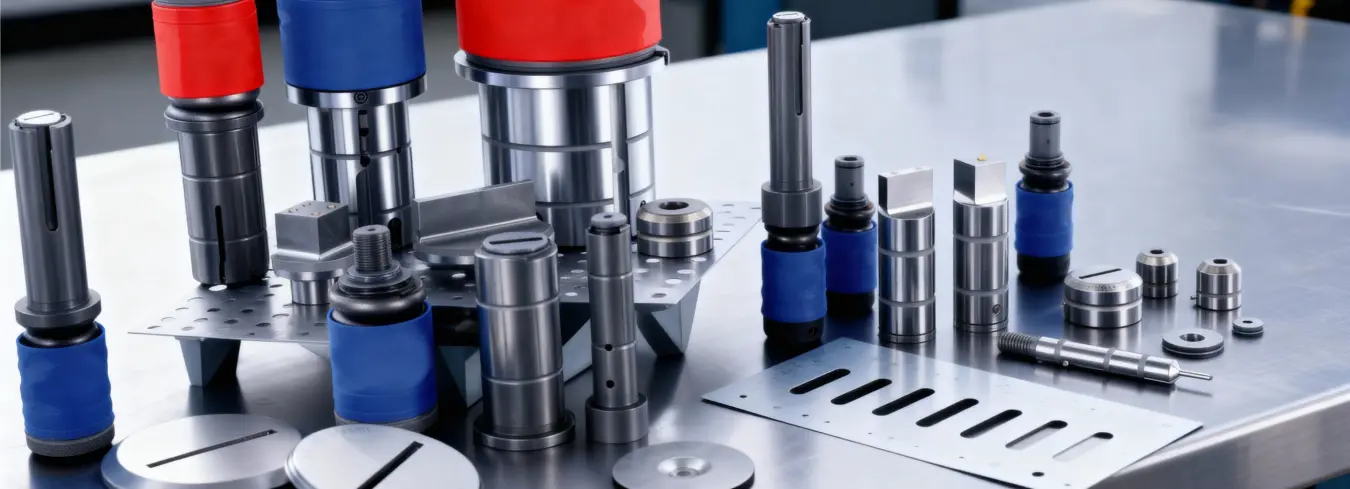
Direct Answer: The main types of punching tools are manual hand punches, hydraulic punching machines, turret punching machines and CNC punching machines. Hand tools such as centre, pin and hole punches suit marking and light work, while machines suit thicker sheet and high-volume production.
A punch looks simple, but each type is made for a different job.
Metal fabrication depends on accuracy, speed and consistency. Punching helps fabricators work efficiently with sheet metal and other materials, from simple holes to complex patterns and markings.
Punching has evolved from manual hand tools to fully automated CNC systems. This guide covers the main types, their applications and how to choose.
It covers hand punches as well as hydraulic, turret and CNC machines. Al Rizq supplies hand punching tools, such as alphabet and number punches and hole punches, and can help you choose. For punching machines, contact us and we will confirm whether we can help.
What Are Punching Tools?
Punching tools are devices used to cut holes, shapes, letters or numbers in metal sheets using force applied through a punch and die. They can be manual, hydraulic or machine-driven, depending on material thickness and production volume.
A punching machine is typically used in industrial environments where precision and repeated punching are required. Manufacturers, contractors and fabrication workshops use them widely.
Why Punch Instead of Drill?
Punching is preferred in metalworking because it offers:
- Faster processing compared to drilling.
- Uniform hole size and shape.
- Clean edges with minimal finishing.
- Reduced material wastage.
- High efficiency for bulk production.
These advantages are why punching is widely used in fabrication workshops and manufacturing. Next, the main punching tool types show where each one fits.
Seven Types of Punches and Punching Machines
The seven types below range from simple hand tools to computer-controlled machines.
1. Hand-Operated Punches
Manual punching tools are hand-operated and commonly used for light-duty applications. They suit thin metal sheets and small-scale tasks where power machines are not required.
Best suited for:
- On-site jobs.
- Small workshops.
- Low-volume punching.
They are cost-effective, easy to use and need minimal maintenance.
2. Hydraulic Machines
A hydraulic punching machine uses hydraulic pressure to deliver high punching force. This makes it ideal for thicker metals and industrial-grade applications.
Common uses include:
- Electrical panels.
- Busbars and control cabinets.
- Structural metal components.
Industrial fabricators widely use hydraulic systems for their power and reliability.
3. Turret Machines
A turret punching machine is designed for high-speed sheet metal processing. It has multiple punches mounted on a rotating turret, which allows quick tool changes during operation.
Key advantages:
- High production speed.
- Multiple hole shapes in one setup.
- Suitable for repetitive industrial work.
This machine is often found in large fabrication units and OEM manufacturing plants.
4. CNC Machines
A CNC punching machine is a computer-controlled system that gives precise, repeatable results and automates complex patterns. It is ideal for complex designs and high-volume production.
Why industries prefer CNC punching:
- Consistent accuracy.
- Reduced labour dependency.
- Faster turnaround times.
- Ability to handle custom patterns.
Advanced manufacturing facilities widely use CNC solutions.
Hand punches for your workshop
Tell us the material, thickness and hole size, and we will help you choose the right punch.
5. Hole Punches
A hole punch is one of the most commonly used punching tools. It is often associated with basic applications, but industrial-grade hole punches are used extensively in metal fabrication for clean, precise circular holes.
Typical applications include:
- Sheet metal.
- Aluminium panels.
- Electrical enclosures.
- Thin sheets and labelling materials.
This makes the hole punch a versatile option for both light-duty and industrial tasks.
6. Alphabet and Number Punches
An alphabet and number punch marks letters, numbers or symbols onto metal surfaces. These punches are essential for traceability and identification.
Common uses:
- Part numbering.
- Serial marking.
- Branding and labelling.
They are widely used in quality control and manufacturing processes.
7. Other Hand Punches: Centre, Pin, Drift and More
Workshops also use several smaller hand punches, each made for one job:
- Centre punch: makes a small dent to mark where a drill should start, so the drill bit does not wander.
- Prick punch: a finer-pointed punch for marking layout lines and reference points.
- Pin punch: a straight-sided punch for driving out pins, rivets and bolts.
- Drift (taper) punch: starts the removal of a stuck pin, or lines up holes before a bolt is fitted.
- Hollow punch: a tube-shaped punch with a sharp edge that cuts clean round holes in soft materials such as gaskets, leather or thin sheet.
- Knockout punch set: cuts round holes in sheet metal, such as conduit and cable entries in electrical enclosures. It uses a punch, a die and a draw stud.
Choose the punch by the job: marking, driving out a pin or cutting a hole. Strike marking and driving punches squarely with a hammer of suitable weight, and wear eye protection. Replace any punch with a mushroomed head.
How to Choose the Right Punch or Machine
Before you invest in punching equipment, consider the factors in this table.
| Factor | Importance |
|---|---|
| Material thickness | Determines tool strength |
| Production volume | Manual vs automated |
| Precision level | CNC for high accuracy |
| Workspace size | Machine footprint |
| Supplier support | Guidance and availability |
Working with a supplier who gives clear guidance on your material and thickness helps you choose the right tool.
Questions to Ask Before You Buy
A few direct questions show how useful a supplier will be:
- Which punches, dies and accessories are available, and in what sizes?
- Can they help you choose the right tool for your material and thickness?
- How quickly can they deliver, and are replacement punches and dies available?
- What documentation or specification sheet comes with the tool?
A good supplier answers these clearly before you order.
Matching the Tool to the Job
From manual tools to advanced CNC systems, punching tools are a vital part of modern metal fabrication. Each type serves a specific purpose, and selecting the right one can improve output quality and production speed.
Equipping a workshop? Tell us the material, thickness and hole sizes you work with, and we will recommend the right hand punching tools.
Hand Punches From Hunter, QMax and Garvin
Al Rizq supplies hand punching tools in Dubai and across the UAE, including alphabet and number punches and hole punches.
Brands include Hunter and QMax, with punch and die sets, hydraulic punching tools and knockout punch sets.
Garvin covers punching accessories such as punches, dies and press tools. Tell us the material, thickness and hole size, and we will recommend a punch.
Tell us the hole you need to make
Share the material, thickness and hole size, and see our punching tools range.
Frequently Asked Questions
What are the types of punching tools?
The main types are manual hand punches, hydraulic punching machines, turret punching machines and CNC punching machines. Hand punches include hole, centre, pin, drift, hollow and alphabet and number punches.
What is a punch tool used for in metalwork?
A punch is used to mark metal, cut holes or drive out pins and rivets. The job decides the type: a centre punch marks, a pin punch drives, and a hole punch cuts.
What is the difference between a centre punch and a pin punch?
A centre punch has a pointed tip and makes a dent to start a drill. A pin punch has a straight, flat-ended shank and drives out pins, rivets and bolts.
What is a hydraulic punching machine used for?
A hydraulic punching machine uses hydraulic pressure to punch thicker metals. Typical uses include electrical panels, busbars, control cabinets and structural components.
What is the difference between turret and CNC punching machines?
A turret machine holds many punches on a rotating turret for quick tool changes. A CNC machine is computer-controlled and handles custom patterns, and many turret machines are also CNC controlled.
Does Al Rizq supply punching machines?
Al Rizq supplies hand punching tools in Dubai and across the UAE. For punching machines, contact us and we will confirm whether we can help.