

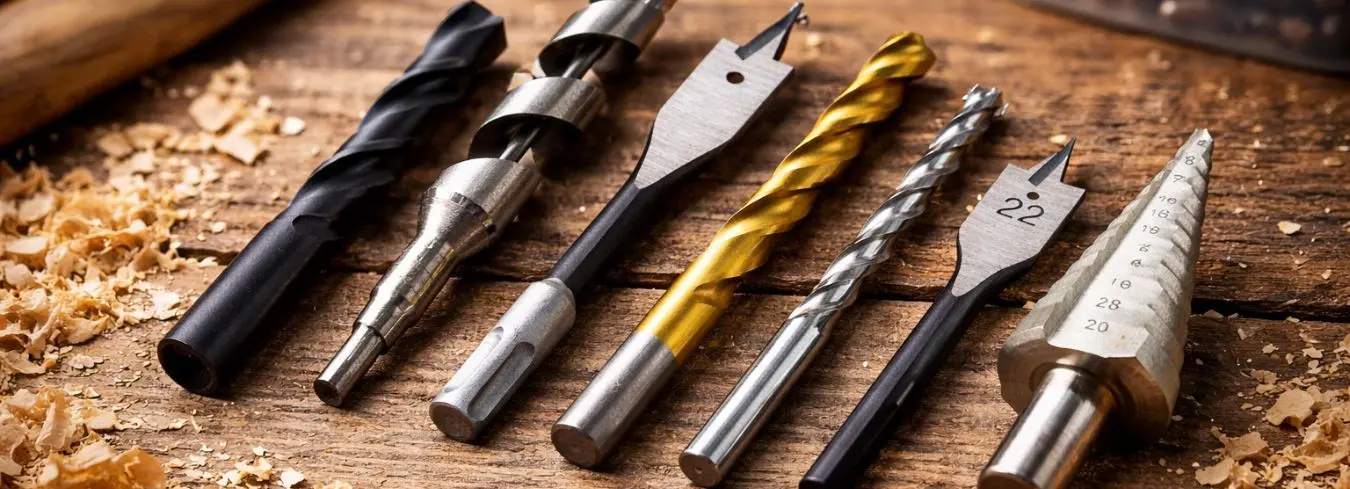
Picking a drill bit sounds simple until you grab the wrong one and end up with a burnt tip, a wandering hole, or a broken bit halfway through the job. The reality is that no single drill bit works well on every material. Wood, metal, concrete, ceramic, and composites all behave differently under a cutting edge, and the bit you choose needs to match what you are drilling into.
This guide walks you through a clear, practical six-step framework for choosing the right drill bit based on the material you are working with. Whether you are a professional in a production environment or running a maintenance workshop, following these steps will save you time, reduce tooling costs, and get better results on every job.
Here are the following six steps below:
Step 1: Identify the Exact Material You Are Drilling Into
This sounds obvious, but many drilling problems start here. People say they are drilling into metal without specifying whether it is mild steel, stainless steel, cast iron, aluminium, or hardened tool steel. Each of these behaves very differently and calls for a different approach. The same applies to non-metals. There is a big difference between drilling into softwood, hardwood, MDF, fiber cement board, or laminate. Concrete, brick, and stone all require different bit types as well.
Before anything else, confirm the exact material. If you are unsure, check the material specification, ask the site engineer, or test a small area first. Getting this step right makes every other step easier.
Step 2: Match Bit Material to Workpiece Material
Once you know what you are drilling into, you can match the bit material accordingly. High Speed Steel (HSS) bits are the most common and work well for general-purpose drilling in wood, plastics, and softer metals like aluminium and mild steel. They are affordable and widely available from most drill bit suppliers.
Cobalt bits are an upgraded version of HSS with added cobalt content. They handle harder metals like stainless steel, cast iron, and high-tensile alloys far better than standard HSS. They also dissipate heat more effectively, which matters a lot when drilling tough materials.
Carbide-tipped and solid carbide bits are used for masonry, concrete, ceramics, and very hard metals. They are harder than both HSS and cobalt but also more brittle, so they need stable, vibration-free setups to perform well.
TiN, TiAlN, and other coated bits offer extended life across a range of applications. They are designed to cut down friction, resist heat, and increase surface strength. They are particularly useful in high-volume production where tool life directly affects cost per hole.
Step 3: Consider the Drilling Operation and Depth
The type of operation matters as much as the material. A short through-hole in mild steel is a very different job from a deep-hole drilling operation in stainless.
For deep holes, chip evacuation becomes critical. Bits with wider flute geometry help clear chips more efficiently and reduce the risk of the bit binding or breaking. When drilling deep into metals, it is also good practice to use a peck drilling cycle, withdrawing the bit periodically to clear chips and allow cooling.
For interrupted cuts or drilling near edges, bit rigidity is important. Shorter bits or stub-length drills are more rigid and less prone to deflection than long-series versions. Use the shortest bit appropriate for the job.
Step 4: Check the Required Hole Quality and Tolerance
If you are drilling a clearance hole for a bolt that will never be seen again, a standard HSS bit and a hand drill will get the job done. If you are drilling a hole that will be reamed, tapped, or used as a precision fit location, the approach changes entirely.
For tight-tolerance holes, use a center drill or spot drill first to establish an accurate starting point. This prevents the bit from wandering on entry. Follow with a well-ground, correctly sized drill running at the right speed, then finish with a reamer if required.
Surface finish inside the hole also matters for some applications. Carbide bits and coated bits generally produce a cleaner hole wall than uncoated HSS, particularly in non-ferrous metals.
Step 5: Factor in Machine Type and Setup Conditions
A drill press or CNC machining center gives you far more control than a handheld power drill. The bit you choose should be appropriate for the equipment you are using. Handheld drilling is less stable and generates more vibration. In this situation, a shorter bit with a robust tip geometry is more forgiving. Using long or thin bits freehand increases the risk of breakage and poor hole position.
On a drill press or CNC machine, you can take advantage of more precise bit geometries and harder grades that would be too brittle or too demanding to use handheld. These machines also allow you to control feed rate accurately, which makes a significant difference to bit life and hole quality.
Coolant and lubrication also fall into this step. Metal drilling on a machine benefits greatly from cutting fluid. It reduces heat at the cutting edge and extends bit life considerably. For most production environments, this is not optional.
Step 6: Source from Reliable Drill Bit Suppliers
Even the best bit selection on paper will underperform if the quality of the tooling itself is poor. Consistency in geometry, coating adhesion, and material composition varies significantly between brands and between suppliers.
Working with reputable drill bit suppliers ensures that the bits you receive match their specifications and perform as expected. In production environments, inconsistent tooling leads to variable results, higher scrap rates, and unexpected downtime. The cost difference between quality tooling and budget alternatives is almost always recovered through longer tool life and fewer rejected parts.
When sourcing for demanding applications, look for suppliers who can provide technical support and material-specific recommendations. Good suppliers are not just order-takers. They help you choose the right product for the job and can advise on speeds, feeds, and application techniques.
How This Framework Improves Everyday Operations
Following these six steps does not add much time to your planning process, but it changes outcomes significantly. Many drilling problems that seem like machine or operator issues are actually tooling selection issues. The wrong bit for the material is the root cause of more scrap, more broken tools, and more rework than most people realize. Apply this framework consistently, and you will notice the difference in tool life, hole quality, and job efficiency across the board.
Do You Want to Get the Right Drill Bits for Your Application?
We supply a comprehensive range of Presto drill bits and cutting tools to workshops, manufacturers, and maintenance teams across Dubai and the wider UAE. From HSS and cobalt drills to carbide-tipped and coated specialist bits, our range covers every material and application.
As trusted drill bit suppliers in the region, we combine quality tooling with hands-on technical support to help you choose the right product for every job. Whether you need a single bit type or want to review your full tooling inventory, our team is ready to help.
FAQs
Q1. What is the best drill bit for stainless steel?
Cobalt drill bits are the most reliable choice for stainless steel. The cobalt content improves heat resistance, which is important because stainless steel work-hardens quickly if the cutting speed is too slow or the feed rate is inconsistent. Always use cutting fluid and maintain a steady feed pressure when drilling stainless to prevent work hardening and premature bit wear.
Q2. Can I use the same drill bit for wood and metal?
HSS bits can technically be used on both, but it is not ideal. Bits designed for wood typically have a more aggressive point geometry suited to fibrous materials, while metal-cutting bits are ground for harder, more uniform materials. Using a wood bit on metal will dull it quickly, and using a metal bit on wood may not produce as clean an entry or exit. Using the appropriate bit for each material will always give better results.
Q3. How do I prevent drill bits from overheating?
Overheating is usually caused by running at too high a speed, insufficient feed pressure, or lack of lubrication. Match your spindle speed to the material and bit diameter using a cutting speed chart. Apply cutting fluid or lubricating oil when drilling metals. For deep holes, use a peck drilling technique to allow the bit to cool and clear chips between passes.
Q4. When should I use carbide drill bits instead of HSS?
Carbide bits are best suited for very hard or abrasive materials such as hardened steel, ceramics, carbon fibre, and masonry. They hold their cutting edge longer in these conditions but are more brittle than HSS, so they require a rigid, stable machine setup. For general workshop use in softer metals and wood, HSS or cobalt bits are usually more practical and cost-effective.
Q5. How do I know if I am buying quality drill bits?
Quality drill bits are consistent in geometry, have a clean and uniform finish, and are made from the material grade specified by the manufacturer. Buying from established drill bit suppliers with a track record in your industry is the most reliable way to ensure consistent quality. Look for suppliers who provide material certifications, application support, and stand behind their products with clear warranty or return policies.