

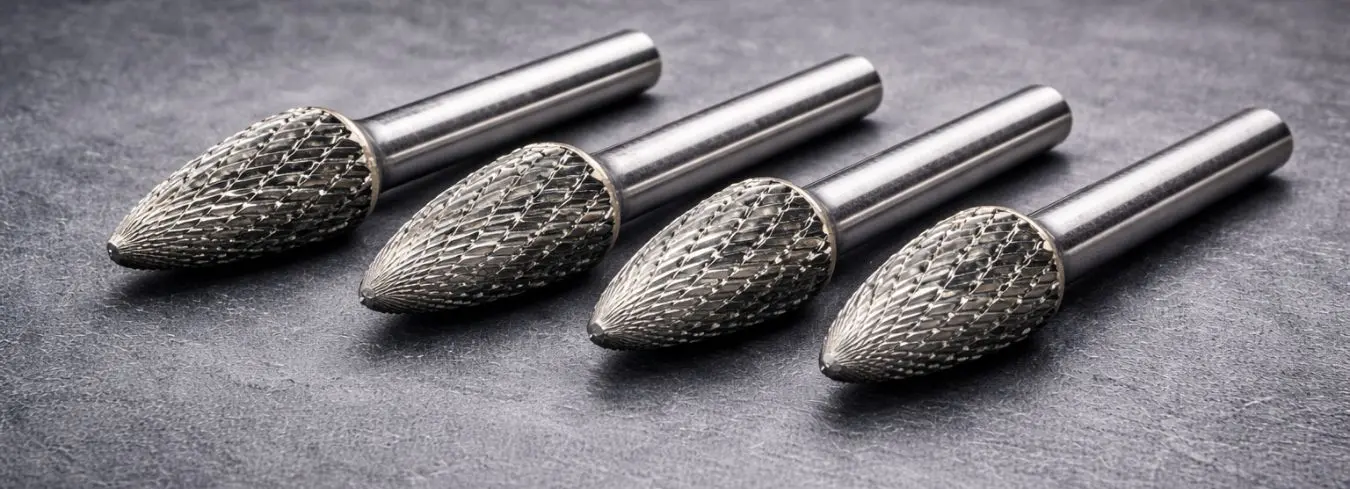
Precision metalwork leaves no room for compromise. Whether you are deburring a weld seam, shaping a casting, or cleaning up a bore, the tools you use have a direct impact on the quality of the finished part. Among the many cutting tools used in metalworking, carbide burrs are some of the most versatile and most underestimated.
The difference between a quality carbide burr and a poor one is not always visible to the naked eye. But it shows up immediately in how the tool cuts, how long it lasts, and whether the finished surface meets the required standard. For anyone working in fabrication, aerospace, automotive, oil and gas, or general engineering, choosing the right carbide burr is a decision worth taking seriously. This blog explains what makes quality carbide burrs essential in precision metalwork and what you should look for when selecting them.
What Carbide Burrs Are and Why They Are Used
A carbide burr is a small rotary cutting tool made from tungsten carbide, used in die grinders, rotary tools, and CNC machines. They are designed to remove material, shape surfaces, clean welds, enlarge holes, and finish edges on a wide range of metals and other hard materials.
Unlike grinding wheels or abrasive discs, carbide burrs cut rather than abrade. This means they remove material more efficiently, produce a more controlled finish, and last significantly longer when used correctly. They are available in a wide range of shapes including cylinder, ball, tree, cone, and flame, each suited to different operations and access requirements.
In precision metalwork, these tools are used at the most critical stages of a job. They shape features that cannot be reached by conventional milling or grinding tools, clean up surfaces before inspection, and prepare components for coating or assembly. Getting this work wrong is expensive. Using the right tool from the start is not.
The Impact of Quality on Performance
Not all carbide burrs are made equal. The quality of the tungsten carbide substrate, the precision of the flute geometry, and the consistency of the manufacturing process all determine how a burr performs in use.
A low-quality burr may appear similar to a premium one in a product photograph. Under cutting conditions, the difference is obvious. Inferior burrs tend to vibrate excessively, which reduces control and increases operator fatigue. They lose their cutting edge faster, which means more frequent tool changes and higher cost per operation. They are also more likely to chip or fracture under load, which creates both a quality risk and a safety risk.
High-quality carbide burrs, on the other hand, cut smoothly and consistently throughout their working life. The flutes are precisely ground to maintain accurate geometry, which controls chip formation and prevents loading. The carbide grade is selected for the intended application, balancing hardness and toughness to suit the material being worked.
For workshops handling high-value components or working to tight tolerances, the additional cost of premium tooling is recovered quickly through longer tool life, better surface finish, and reduced rework.
How the Wrong Burr Affects Your Work?
Choosing the wrong burr for a material or operation creates problems that compound over the course of a job. Using a burr with the wrong cut type on stainless steel, for example, can cause the flutes to load up with material. This reduces cutting efficiency, generates excessive heat, and produces a poor finish on the workpiece surface.
Using a burr that is too large for the access required forces the operator to work at an angle, increasing the risk of chatter and reducing the accuracy of material removal. Using a burr that is too small for the material removal required means more passes, more time, and more wear on both the tool and the operator.
Getting the selection right from the start is always more efficient than working around the limitations of a poorly chosen tool. This is why working with knowledgeable maford usa carbide burr dealers in dubai matters. Experienced dealers do not just supply the product. They help you select the right shape, cut type, and size for the specific application you are working on.
Matching Burr Type to Application
The variety of carbide burr shapes available is not just a product range decision. Each shape serves a specific set of operations.
Cylindrical burrs are used for flat surfaces, slots, and edges. Ball-shaped burrs work well for concave surfaces and hollows. Tree-shaped and taper burrs are suited to angled surfaces, chamfers, and weld preparation. Inverted cone burrs are used for undercuts and deburring blind holes. Flame-shaped burrs are popular for general contouring and blending.
Beyond shape, the cut type matters enormously. Single-cut burrs produce a smooth finish and are better suited to harder materials and finishing operations. Double-cut burrs remove material faster and are used for roughing and work on softer metals. Aluminium cut burrs have wider, more open flutes to prevent loading when working on non-ferrous metals.
Understanding these distinctions is important for anyone specifying tooling for a precision metalworking operation. If you are unsure which combination is right for your application, a good starting point is to consult with Maford USA carbide burr dealers in Dubai, who can advise based on your specific material and operation type.
The Role of Reputable Brands in Precision Work
Brand reputation in cutting tools is not just marketing. It reflects the consistency of manufacturing standards, the quality of raw materials, and the depth of application knowledge behind the product range. Established brands like Maford invest in the metallurgy, geometry development, and quality control that make their tools perform reliably across demanding applications.
In precision metalwork, repeatability is everything. If a tool performs brilliantly on the first use and inconsistently after that, it creates unpredictability in the production process. Quality-controlled tooling from a trusted manufacturer reduces that variability and gives you confidence that the next burr out of the box will perform exactly like the last one.
This consistency matters even more in industries where component quality has direct safety implications. In those environments, cutting corners on tooling is simply not an option.
Do You Want to Get the Right Carbide Burrs for Your Operation?
At Al Rizq, we supply the full range of Maford USA carbide burrs to workshops and manufacturing businesses across Dubai and the UAE. Our range covers every standard shape, cut type, and shank size, backed by technical support to help you select the right tool for every application.
As established Maford USA carbide burr dealers in Dubai, we work with clients across industries, including oil and gas, fabrication, automotive, marine, and general engineering. We understand the demands of precision metalwork and the role that tooling quality plays in achieving consistent results.
FAQs
Q1. What makes tungsten carbide burrs better than high-speed steel alternatives?
Tungsten carbide is significantly harder and more heat-resistant than high-speed steel. This means carbide burrs hold their cutting edge much longer, especially in tough materials like stainless steel, cast iron, hardened alloys, and titanium. While carbide burrs cost more upfront, the extended tool life and better performance in demanding applications make them the more cost-effective choice for most professional metalworking operations.
Q2. How do I choose between single-cut and double-cut carbide burrs?
Single-cut burrs have one set of helical flutes and produce a smoother finish with less vibration. They are well suited to harder materials and finishing work. Double-cut burrs have two sets of crossing flutes that remove material more aggressively and are better for roughing operations and softer metals. As a general guide, use a single cut for finishing and harder materials and a double cut for faster stock removal on softer materials.
Q4. How do I prevent carbide burrs from loading up during use?
Loading occurs when material builds up in the flutes of the burr, reducing its ability to cut cleanly. It is most common when working on aluminium, copper, and other soft non-ferrous metals. To prevent loading, use an aluminium-specific cut burr with wider flutes, apply a suitable cutting fluid or lubricant, and avoid excessive pressure during use. Keeping the burr moving rather than dwelling in one spot also helps prevent material buildup.
Q5. Why should I buy carbide burrs from a specialist supplier rather than a general tool retailer?
Specialist suppliers carry a broader range of shapes, sizes, and cut types to suit specific applications. They also have the technical knowledge to advise on the right selection for your material and operation. A general retailer may stock only the most common sizes and shapes, which limits your options. Working with dedicated Maford USA carbide burr dealers in Dubai ensures you get the right product for the job along with the application support to use it effectively.